Anxiety And Sleep Disorders: Causes, Symptoms, Treatment
Anxiety & Sleep Disorders: When Mental Stress Affects the Patient’s Body
“Sab Theek Hai, Phir Bhi Ghabrahat Aur Neend Kyun Nahi Aati ?”
In OPD today, a very common complaint is:
- “Doctor, ghabrahat hoti hai.”
- “Neend nahi aati, dimag chalta rehta hai.”
- “Heart fast beat karta hai, par test normal hain.”
Many patients feel something serious is wrong with their body, but all reports—
ECG, BP, blood tests—come normal.
In a large number of such cases, the real cause is
anxiety, chronic stress, and disturbed sleep.
👉 Anxiety and sleep problems are not just “mind issues” —
they directly affect the body.
This blog explains:
- Anxiety & stress in simple language
- Why sleep problems happen
- Medicine vs lifestyle changes
- When to worry and when not
What Is Anxiety? (Simple Explanation)
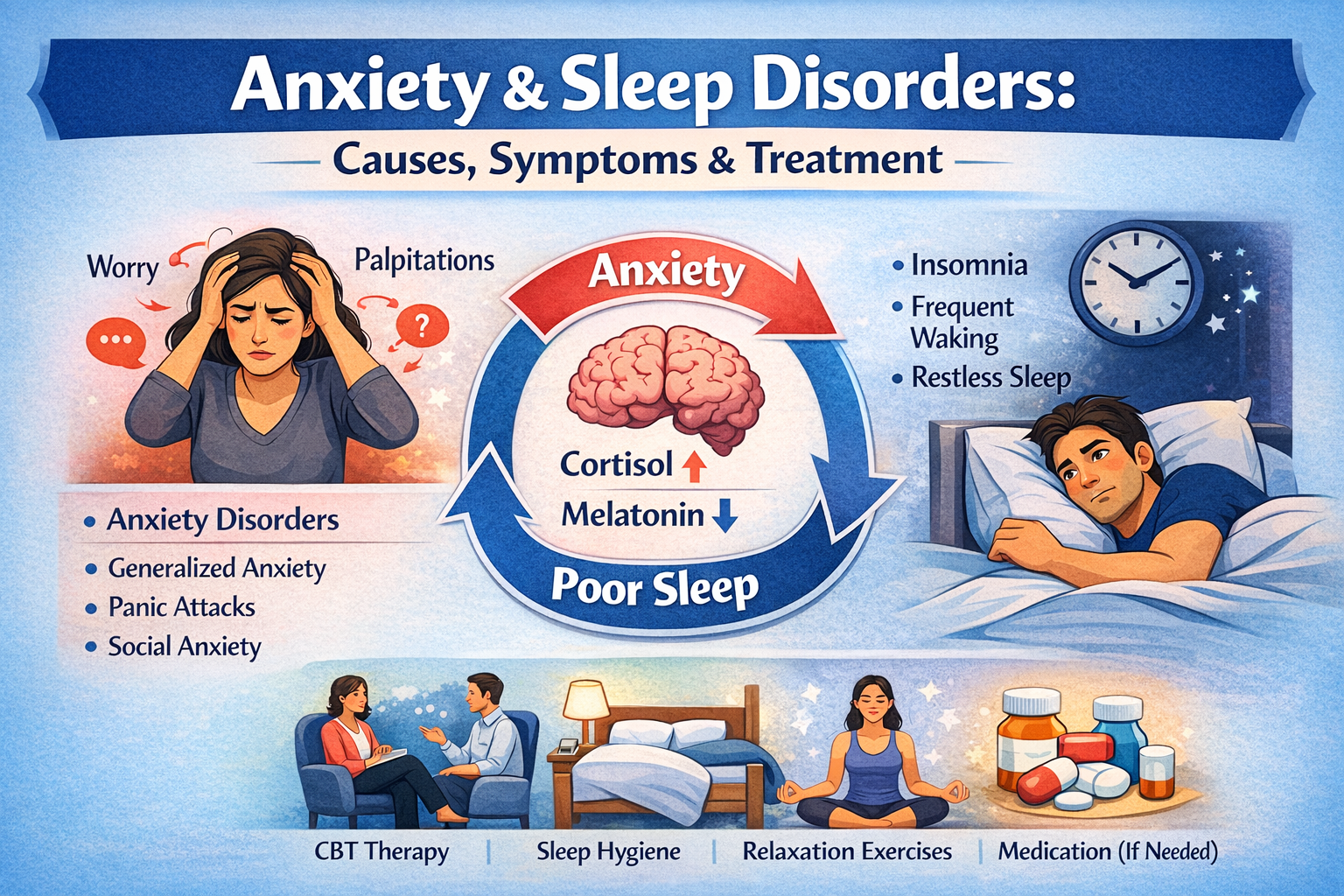
Anxiety is a state where the body stays in constant alert mode,
even when there is no real danger.
- Stress: Short-term (exam, interview)
- Anxiety: Long-term, continuous fear or worry
In anxiety, the body behaves as if it is in danger all the time.
How Anxiety Affects the Body
Anxiety activates the “fight or flight” system.
- Increased heart rate
- Faster breathing
- Muscle tension
- Increased stress hormones (cortisol, adrenaline)
👉 Over time, this leads to physical symptoms, not just mental discomfort.
Common Physical Symptoms of Anxiety
Very Common
- Ghabrahat (restlessness)
- Palpitations (fast heartbeat)
- Chest tightness
- Sweating
- Shortness of breath
Other Body Symptoms
- Headache
- Body pain
- Stomach upset / acidity
- Frequent urination
- Tingling in hands or feet
- Fatigue even after rest
⚠️ Because symptoms are physical, patients often fear
heart attack, BP, or brain problem.
What Are Sleep Disorders?
Sleep disorder means:
- Difficulty falling asleep
- Frequent waking at night
- Early morning awakening
- Non-refreshing sleep
The most common sleep problem is Insomnia.
Why Anxiety and Sleep Problems Go Together
- Anxiety → racing thoughts → poor sleep
- Poor sleep → tired brain → more anxiety
👉 This creates a vicious cycle.
Real-Life Patient Examples
Example 1: Young Man With Ghabrahat
A 28-year-old male complained of sudden ghabrahat,
fast heartbeat, and fear of heart attack.
ECG, echo, and BP were normal.
Diagnosis: Anxiety disorder
After counseling, breathing exercises, and short-term medication,
symptoms reduced significantly.
Example 2: Middle-Aged Woman With Sleeplessness
A 42-year-old woman complained,
“Neend 2–3 ghante se zyada nahi aati”, along with body pain and fatigue.
Cause: Chronic stress and overthinking at night
Treatment: Sleep hygiene, relaxation techniques,
and lifestyle correction.
👉 Sleep improved without long-term medicines.
Stress: The Silent Cause
Stress may come from:
- Work pressure
- Financial problems
- Family issues
- Health anxiety
- Excessive screen time
Chronic stress slowly damages sleep quality, digestion,
immunity, and hormonal balance.
Symptoms That Worry Patients the Most
- “Kya mujhe heart problem hai?”
- “Kya BP badh raha hai?”
- “Kya main pagal ho raha hoon?”
👉 Reassurance is very important.
Anxiety does NOT mean weakness or madness.
Anxiety vs Heart Problem
Anxiety
- Symptoms fluctuate
- Worse with stress
- Improve with relaxation
- Tests usually normal
Heart Disease
- Pain related to exertion
- Progressive symptoms
- Abnormal test reports
⚠️ Proper medical evaluation is important initially.
Role of Sleep Deprivation on the Body
- Increased BP
- Increased sugar
- Weight gain
- Reduced concentration
- Irritability
👉 Sleep is not luxury, it is treatment.
Medicine vs Lifestyle Changes
Do All Patients Need Medicines?
❌ No.
Most patients improve with lifestyle changes,
stress management, and sleep correction.
When Medicines Are Helpful
- Severe anxiety
- Panic attacks
- Depression with anxiety
- Severe insomnia
👉 Medicines are usually short-term support, not lifelong dependency.
Lifestyle Changes That Truly Help
1. Sleep Hygiene
- Fixed sleep and wake time
- No mobile 1 hour before sleep
- Dark, quiet bedroom
- Avoid tea/coffee at night
2. Breathing & Relaxation
- Deep breathing
- Meditation
- Progressive muscle relaxation
3. Physical Activity
- Walking 30 minutes daily
- Light yoga
- Stretching
4. Reduce Screen Time
Especially at night. Blue light disturbs sleep hormone
(melatonin).
Simple Breathing Exercise for Anxiety
4–7–8 Technique
- Inhale for 4 seconds
- Hold for 7 seconds
- Exhale for 8 seconds
Repeat 4–5 times during ghabrahat.
Common Patient Myths
- “Medicine once started is lifelong” ❌
- “Anxiety patients are weak” ❌
- “Sleeping pills always addictive” ❌
Reality: Correct treatment improves quality of life,
and lifestyle change reduces medicine need.
When Should Patients Seek Help?
- Anxiety affecting daily life
- Sleep less than 4 hours regularly
- Panic attacks
- Depression symptoms
- Thoughts of self-harm (emergency)
Doctor’s Advice for Patients (Dr. Abhijeet)
Anxiety and sleep problems are real medical conditions, not imagination.
Early treatment with reassurance, lifestyle correction,
and proper guidance can completely reverse symptoms
and restore normal life.
एंग्जायटी और नींद की समस्या: जब तनाव शरीर को नुकसान पहुंचाए
“घबराहट और नींद न आना” क्यों होता है?
लगातार तनाव से दिमाग और शरीर आराम नहीं कर पाते।
इससे घबराहट, दिल तेज धड़कना और नींद न आना जैसी समस्याएं होती हैं।
एंग्जायटी के आम लक्षण
- बेचैनी
- दिल की धड़कन तेज
- पसीना
- सांस फूलना
- थकान
नींद की समस्या क्यों होती है?
- ज्यादा सोच
- मोबाइल का ज्यादा इस्तेमाल
- तनाव
- अनियमित दिनचर्या
दवा बनाम जीवनशैली बदलाव
दवा कब जरूरी?
- ज्यादा घबराहट
- पैनिक अटैक
- बहुत ज्यादा नींद की समस्या
जीवनशैली बदलाव क्यों जरूरी?
- दवा का असर बढ़ाता है
- लंबे समय तक फायदा देता है
मरीजों के लिए डॉक्टर की सलाह
एंग्जायटी और नींद की समस्या ठीक हो सकती है।
समय पर इलाज, सही दिनचर्या और तनाव कम करने से
आप बिना ज्यादा दवाइयों के स्वस्थ जीवन जी सकते हैं।