PCOS And PCOD Explained: Symptoms, Pregnancy And Treatment
PCOS & PCOD Explained: A Simple Guide for Female Patients
“Periods Irregular Hain… Weight Badh Raha Hai… Kya Pregnancy Ho Payegi?”
In OPD, PCOS / PCOD is one of the most common diagnoses among girls and women aged 15–40 years.
Most patients come with anxiety, confusion, and fear.
- “Doctor, period time pe nahi aata.”
- “Weight bahut jaldi badh raha hai.”
- “PCOS hai, kya main kabhi pregnant ho paungi?”
- “Log bolte hain PCOS ka koi ilaaj nahi.”
👉 The truth:
PCOS / PCOD is very common, manageable, and treatable.
With correct understanding and lifestyle changes, most women live a completely normal life.
This blog explains PCOS / PCOD in simple, patient-friendly language, focusing on:
- Period irregularity
- Weight gain
- Pregnancy & fertility
- Medicine vs lifestyle
- Long-term health
What Is PCOS / PCOD? (Simple Explanation)
PCOS = Polycystic Ovary Syndrome
PCOD = Polycystic Ovarian Disease
Both are hormonal conditions that affect how ovaries work.
What Happens in PCOS / PCOD?
- Hormonal imbalance (especially insulin and male hormones)
- Eggs do not mature properly
- Ovulation becomes irregular
- Period cycle gets disturbed
- Small cysts may be seen in ovaries on ultrasound
👉 PCOD is usually milder and more common
👉 PCOS is more metabolic and long-term
In daily practice, treatment approach is similar.
Why Is PCOS So Common Today?
Earlier, PCOS was rare. Today, it affects 1 in every 5 women in India.
Main Reasons
- Sedentary lifestyle
- Junk food and sugary diet
- Weight gain
- Insulin resistance
- Stress and poor sleep
- Genetic tendency
👉 Important: Even thin girls can have PCOS (Lean PCOS).
Main Symptoms of PCOS / PCOD
1️⃣ Period Irregularity (Most Common)
- Periods delayed by weeks or months
- Periods once in 2–3 months
- Missed periods
- Sometimes heavy or prolonged bleeding
👉 Irregular periods are often the first warning sign.
2️⃣ Weight Gain (Major Tension for Patients)
- Weight increases easily
- Belly fat increases
- Weight loss becomes difficult even with dieting
Why?
PCOS causes insulin resistance, which:
- Increases fat storage
- Reduces fat burning
👉 Even 5–10% weight loss can bring major improvement.
3️⃣ Skin & Hair Problems
- Pimples / acne
- Hair fall
- Facial hair growth (upper lip, chin)
- Dark skin near neck or armpits (sign of insulin resistance)
4️⃣ Fertility & Pregnancy Issues
- Irregular ovulation
- Difficulty in planning pregnancy
- Fear of infertility
👉 Key reassurance:
👉 Most women with PCOS can get pregnant, naturally or with simple treatment.
Real-Life Patient Examples
Example 1: College Girl With Irregular Periods
A 20-year-old student had periods once every 3–4 months, along with acne and mild weight gain.
Ultrasound showed PCOD.
Treatment:
- Diet correction
- Regular exercise
- Short-term medicines
👉 Periods became regular within 5–6 months.
Example 2: Married Woman Worried About Pregnancy
A 29-year-old woman with PCOS was trying to conceive for 1 year.
- Irregular ovulation
- Weight gain
- Stress and fear
Treatment:
- Weight loss (7%)
- Ovulation induction tablets
- Lifestyle changes
👉 She conceived naturally within 8 months.
PCOS & Pregnancy – Biggest Myths
- “PCOS means infertility” ❌
- “PCOS patients never conceive” ❌
- “IVF is the only option” ❌
Reality:
- PCOS delays ovulation, not fertility permanently
- Weight control improves egg release
- Simple medicines often work
- IVF is rarely the first step
👉 Early treatment = better pregnancy chances
How Is PCOS Diagnosed?
Diagnosis is based on history + tests, not ultrasound alone.
Common Tests
- Menstrual history
- Ultrasound pelvis
- Blood sugar & insulin
- Hormone tests
- Thyroid test
- Lipid profile
⚠️ Important: Not every cyst on ovary = PCOS.
PCOS & Weight: Why Is Weight Loss Difficult?
- Increased cravings
- Easy fat storage
- Slow metabolism
👉 Losing even 5 kg can:
- Regularize periods
- Improve ovulation
- Reduce acne
- Increase pregnancy chances
Best Diet for PCOS Patients
Foods to Eat More
- Green vegetables
- Fruits (limited quantity)
- Whole grains
- Protein-rich foods (dal, paneer, eggs)
- Nuts & seeds (small quantity)
- Plenty of water
Foods to Avoid
- Sugar and sweets ❌
- Cold drinks ❌
- Bakery and junk food ❌
- Maida and white rice ❌
- Fried foods ❌
👉 Low Glycemic Index (Low-GI) diet works best.
Role of Exercise in PCOS
- Brisk walking (30–45 minutes daily)
- Yoga
- Strength training
- Cycling / swimming
👉 Exercise improves insulin sensitivity better than medicines.
Medicine vs Lifestyle Changes
Do All Patients Need Medicines?
❌ No.
Many patients improve with weight control, diet changes, regular exercise, and stress reduction.
When Medicines Are Needed
- Severe period irregularity
- Fertility planning
- Excess acne or hair growth
- Insulin resistance
👉 Medicines support lifestyle, they do not replace it.
Long-Term Risks If PCOS Is Ignored
- Type 2 diabetes
- High BP
- High cholesterol
- Heart disease
- Endometrial problems
👉 That’s why regular follow-up is important.
PCOS Is Not a Life Sentence
With correct knowledge, healthy lifestyle, and medical guidance:
- Regular periods are possible
- Healthy weight can be maintained
- Pregnancy is achievable
- Normal life is absolutely possible
PCOS Diet Chart & Exercise Guide
How to Use
- Print on A4 size and stick on fridge
- Follow Low-GI, high-protein diet pattern
- Drink 2.5–3 liters water/day
🕘 Morning (6–8 AM)
- 1 glass lukewarm water
- Optional: soaked methi seeds / chia seeds
🍳 Breakfast (8–9 AM)
2 options (choose any one):
- Vegetable omelette / paneer bhurji
- Oats / millet upma with vegetables
- 1 fruit (apple / pear / berries)
❌ Avoid: bread, jam, sugary cereals
☕ Mid-Morning (11–12 PM)
- Coconut water / buttermilk
- Handful nuts (5–6 almonds / 2 walnuts)
🍛 Lunch (1–2 PM)
- 1–2 multigrain roti or small bowl brown rice
- Dal / chana / rajma / fish / curd
- Big bowl salad (cucumber, carrot, green vegetables)
- Only 1 tsp ghee or oil
☕ Evening Snack (4–5 PM)
- Roasted chana / sprouts chaat
- Green tea / lemon water
❌ Avoid: biscuits, samosa, pakora
🍲 Dinner (7–8 PM)
- Light and early dinner
- Vegetable sabzi + paneer / tofu / egg
- Soup or salad
❌ Avoid: rice and heavy carbohydrates at night
🌙 Before Bed
- Warm haldi milk (optional)
- No mobile 1 hour before sleep
❌ Foods to Strictly Limit
- Sugar & sweets
- Cold drinks
- Bakery items
- Maida (refined flour)
- Fried foods
PCOS Exercise Guide (Safe & Effective)
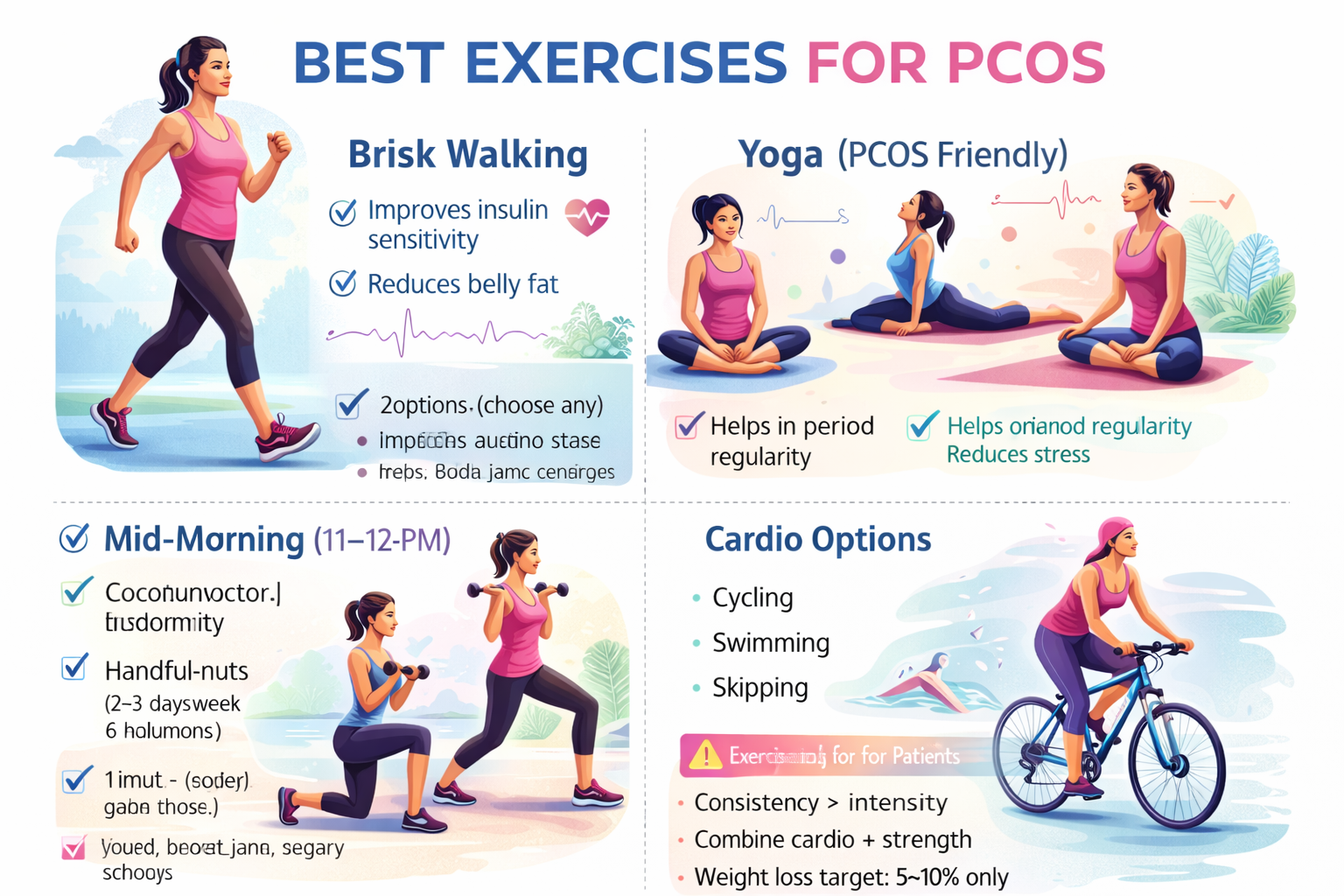
🏃 Best Exercises for PCOS (30–45 minutes/day)
1️⃣ Brisk Walking
- Improves insulin sensitivity
- Reduces belly fat
2️⃣ Yoga (PCOS Friendly)
- Surya Namaskar
- Baddha Konasana
- Bhujangasana
- Anulom-Vilom
👉 Helps in period regularity and stress reduction
3️⃣ Strength Training (2–3 days/week)
- Squats
- Lunges
- Resistance band exercises
👉 Builds muscle → improves hormonal balance
4️⃣ Cardio Options
- Cycling
- Swimming
- Skipping (if joints are fine)
⚠️ Exercise Tips for PCOS Patients
- Consistency > Intensity
- Avoid over-exercise
- Combine cardio + strength
- Weight loss target: 5–10% only
🩺 Doctor’s Practical Advice
Diet and exercise work better than medicines alone.
Small daily changes give long-term results.
PCOS is controllable, not permanent infertility.
Doctor’s Advice for Female Patients (Dr. Abhijeet)
PCOS / PCOD is common and manageable.
Do not panic after diagnosis.
Start lifestyle correction early—it is the strongest treatment.
PCOS / PCOD: महिलाओं के लिए आसान और सही जानकारी
(Patient-Focused Guide – Hindi)
PCOS / PCOD क्या है?
यह हार्मोन से जुड़ी समस्या है जिसमें पीरियड अनियमित हो जाते हैं,
वजन बढ़ने लगता है और अंडा समय पर नहीं निकलता।
महिलाओं में आम लक्षण
- पीरियड देर से आना
- वजन बढ़ना
- चेहरे पर मुंहासे
- बाल झड़ना
- गर्भधारण में परेशानी
क्या PCOS में प्रेगनेंसी हो सकती है?
👉 हाँ, बिल्कुल।
ज्यादातर महिलाएं सही इलाज और जीवनशैली बदलाव से गर्भधारण कर लेती हैं।
PCOS का सही इलाज क्या है?
- वजन नियंत्रित करना
- सही खानपान
- रोज़ाना व्यायाम
- जरूरत पड़ने पर दवाइयां
महिलाओं के लिए डॉक्टर की सलाह
PCOS डरने की बीमारी नहीं है।
समय पर ध्यान देने से यह पूरी तरह कंट्रोल में रहती है
और आप स्वस्थ जीवन जी सकती हैं।