Gas, Acidity or IBS? Causes, Symptoms & Diet Correction Guide
Gas, Acidity or IBS? A Patient-Friendly Guide to Stomach Problems
“Roz Gas Banti Hai… Pet Phoola Rehta Hai… Kya Badi Bimari Hai?”
Gas, acidity, and stomach discomfort are among the most common complaints in OPD today.
Patients frequently say:
- “Doctor, roz gas banti hai.”
- “Pet phoola-phoola rehta hai.”
- “Subah theek hota hai, shaam ko acidity badh jaati hai.”
- “Khaana thoda bhi galat ho jaaye to problem shuru.”
Most patients fear:
- Is this a serious disease?
- Do I have ulcer or cancer?
- Why do medicines give only temporary relief?
Truth for patients:
In most cases, the problem is functional, related to food habits, lifestyle, stress, and gut sensitivity—not a dangerous disease.
Understanding the Stomach & Gut (Simple Explanation)
Your digestive system includes:
- Stomach – acid production
- Small intestine – digestion & absorption
- Large intestine – gas and stool formation
Problems occur when:
- Acid is produced excessively
- Digestion becomes slow
- Gut becomes overly sensitive
- Bacterial balance is disturbed
Important: Many symptoms are due to gut function problems, not structural damage.
What Is Gas?
Gas is air produced in the digestive tract due to swallowed air and digestion of food by gut bacteria.
Common Gas Symptoms
- Bloating
- Burping
- Passing gas
- Heaviness after meals
- Mild abdominal discomfort
Occasional gas is normal. Daily troublesome gas indicates diet or lifestyle issues.
What Is Acidity?
Acidity occurs when the stomach produces excess acid or acid flows upward.
Common Acidity Symptoms
- Burning sensation in chest or upper abdomen
- Sour taste in mouth
- Acid reflux
- Chest discomfort after meals
- Worse when lying down
Acidity is not always ulcer.
What Is IBS (Irritable Bowel Syndrome)?
IBS is a functional gut disorder where tests appear normal but gut function is abnormal.
IBS Symptoms
- Recurrent abdominal pain
- Gas and bloating
- Constipation or loose stools
- Alternating constipation and diarrhea
- Relief after passing stool
IBS is strongly linked to stress and gut sensitivity.
Gas vs Acidity vs IBS – Easy Comparison
| Feature | Gas | Acidity | IBS |
|---|---|---|---|
| Main problem | Air / bloating | Excess acid | Gut sensitivity |
| Pain | Mild discomfort | Burning | Cramping pain |
| Relation to food | Yes | Yes | Yes |
| Relation to stress | Mild | Moderate | Strong |
| Tests normal? | Yes | Often | Yes |
Daily Gas – Most Common Reasons
1. Eating Habits
- Eating too fast
- Talking while eating
- Overeating
- Skipping meals, then heavy meals
2. Food Choices
- Fried food
- Spicy food
- Bakery items
- Cold drinks
- Excess tea or coffee
3. Lifestyle Factors
- Long sitting hours
- No physical activity
- Late dinner
- Sleeping immediately after meals
4. Stress & Anxiety
Stress directly affects gut movement and sensitivity. The gut and brain are connected.
Real-Life Patient Examples
Example 1: Office Worker With Daily Gas
A 35-year-old office worker complained of daily bloating and burping after lunch. All tests were normal.
Cause: Fast eating, excess tea, long sitting hours.
Correction: Slow eating, reduced tea, walking after meals.
Result: Gas reduced without long-term medicines.
Example 2: IBS Triggered by Stress
A 42-year-old woman had gas, abdominal pain, and loose motions during stress. Tests were normal.
Diagnosis: IBS.
Treatment: Diet modification, stress management, gut-friendly routine.
Result: Symptoms improved significantly.
When Should Patients Worry ? (Red Flags)
- Unexplained weight loss
- Blood in stool
- Persistent vomiting
- Severe night-time pain
- Anemia
- New symptoms after age 50
Otherwise, most gas and acidity problems are non-dangerous.
Food Habit Correction – The REAL Treatment
How to Eat
- Eat slowly
- Chew food properly
- Fixed meal timings
- Small, frequent meals
Foods to Reduce / Avoid
- Fried food
- Spicy and oily food
- Bakery items
- Cold drinks
- Excess tea or coffee
- Alcohol
Foods That Help Gut Health
- Rice or roti (moderate)
- Boiled vegetables
- Curd or buttermilk
- Banana, papaya
- Plenty of water
Role of Physical Activity
- Walking 20–30 minutes daily
- Avoid sitting immediately after meals
- Light stretching
Movement improves digestion and gas release.
Do Patients Need Medicines ?
- Short-term medicines help symptom relief
- Long-term dependence is not ideal
- Lifestyle correction gives permanent benefit
Avoid self-medication for months.
Doctor’s Advice for Patients (Dr. Abhijeet)
Gas, acidity, and IBS are common but manageable problems.
Your gut responds strongly to what you eat, how you eat, and how you live.
Correct your food habits, reduce stress, stay active—and your stomach will heal naturally.
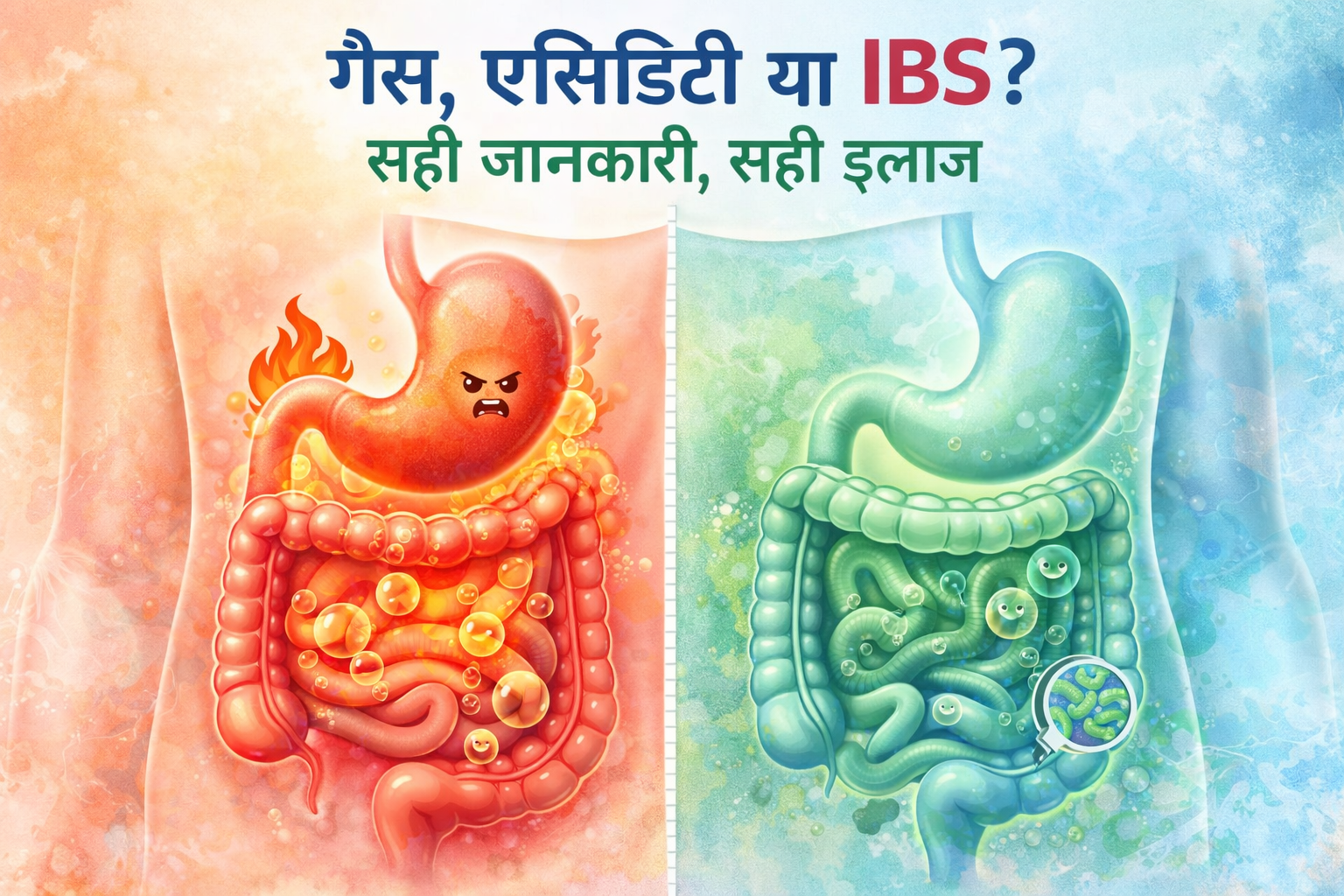
गैस, एसिडिटी या IBS? पेट की समस्या की आसान जानकारी
रोज़ गैस क्यों बनती है?
अधिकतर मरीजों में रोज़ गैस बनने के पीछे ये आम कारण होते हैं:
- जल्दी-जल्दी खाना
- तला-भुना और ज्यादा मसालेदार भोजन
- चाय-कॉफी का ज़्यादा सेवन
- मानसिक तनाव
- देर रात खाना
👉 महत्वपूर्ण बात:
पेट की गंभीर बीमारी से ज्यादा, यह समस्या अक्सर खाने-पीने और जीवनशैली की आदतों से जुड़ी होती है।
गैस, एसिडिटी और IBS में फर्क
- गैस: पेट फूलना, डकार आना
- एसिडिटी: छाती या पेट में जलन, खट्टी डकार
- IBS: पेट दर्द + गैस + शौच की समस्या
खाने की आदत सुधारें (सबसे जरूरी इलाज)
- धीरे-धीरे और चबा कर खाएं
- समय पर भोजन करें
- हल्का और सादा भोजन लें
- खाने के बाद 10–15 मिनट टहलें
👉 याद रखें:
दवाइयाँ अस्थायी राहत देती हैं, लेकिन खाने की आदतों में सुधार से पेट की समस्या जड़ से ठीक होती है।
गैस, एसिडिटी या IBS ?
यह बीमारी नहीं, बल्कि जीवनशैली और खाने की आदतों की समस्या होती है।
धीरे खाएं, समय पर खाएं, हल्का भोजन लें और रोज़ चलें—पेट खुद ठीक हो जाएगा।