Ischemic vs Hemorrhagic Stroke
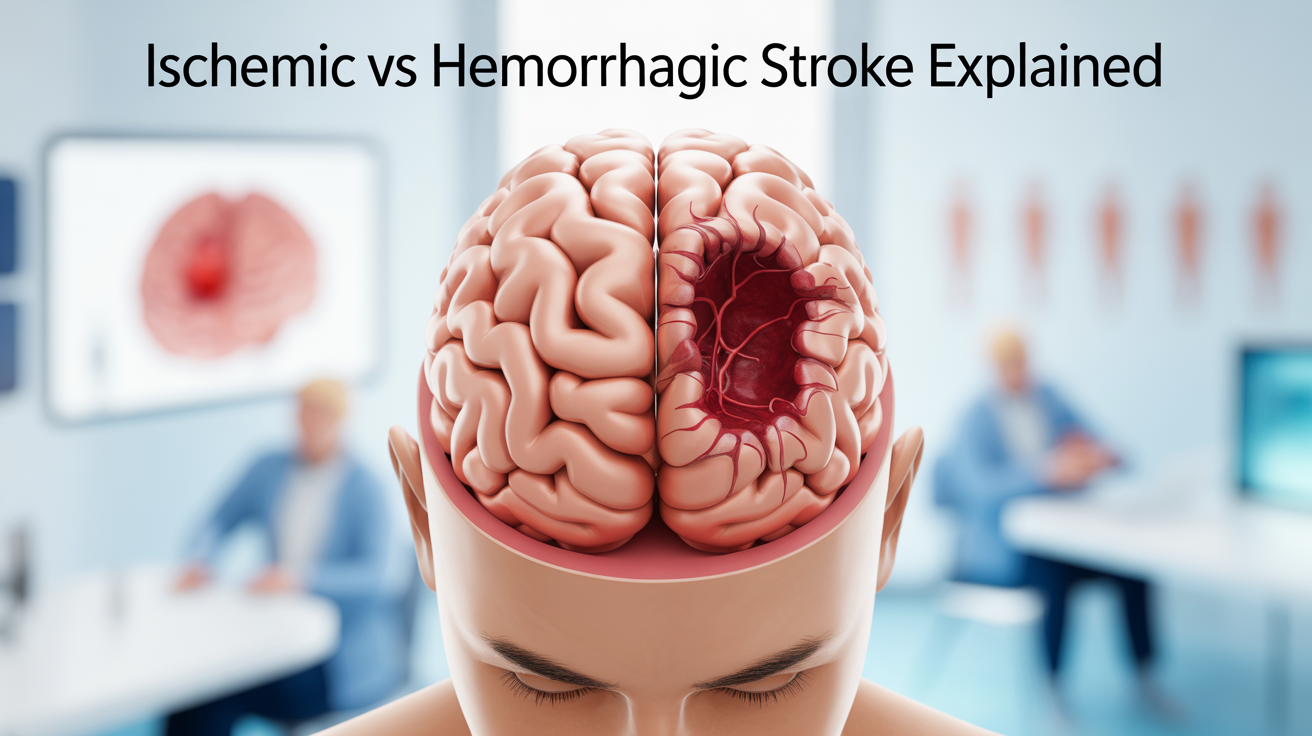
🧠 Ischemic vs Hemorrhagic Stroke Explained
A Complete Patient-Friendly Guide (Symptoms, Risks, Treatment & Recovery Hope)
“Doctor, suddenly he collapsed… half of his body is not moving… is it paralysis or stroke?”
This is one of the most common and frightening situations faced by families in emergency rooms.
Most people know the word “stroke”, but very few understand:
- That there are different types of stroke
- That each type behaves very differently
- That wrong assumptions or delay can be life-threatening
👉 Two major types of stroke are:
- Ischemic Stroke
- Hemorrhagic Stroke
Although symptoms may look similar, the cause, danger, and treatment are completely different.
This guide is written in simple, non-medical English so that any common person can understand:
- What exactly happens in the brain
- Why stroke occurs
- What are the benefits and risks
- How recovery is possible with proper treatment and physiotherapy
🚨 What Is a Stroke? (Very Simple Explanation)
A stroke happens when the brain suddenly:
- Does not receive enough blood, or
- Suffers bleeding inside the brain
Because of this:
- Brain cells stop getting oxygen
- Brain cells start dying within minutes
- Body functions controlled by that brain area get affected
⚠️ Stroke is always a medical emergency.
Every minute of delay means more brain damage.
🧠 Why Blood Supply Is So Important for the Brain
- The brain uses about 20% of the body’s oxygen
- It cannot store oxygen or glucose
- It starts getting damaged within 3–5 minutes without blood
So when blood flow is:
- Blocked → Ischemic Stroke
- Leaking / bleeding → Hemorrhagic Stroke
🟦 Ischemic Stroke – The Most Common Type
🔬 What Is an Ischemic Stroke?
An ischemic stroke occurs when a blood vessel supplying the brain becomes blocked and blood cannot reach part of the brain.
👉 The blockage is usually caused by:
- A blood clot
- Fatty cholesterol deposits (plaques)
📊 About 80–85% of all strokes are ischemic strokes.
🧩 How Does the Blockage Happen?
- Thrombotic Stroke: A clot forms inside a brain artery, usually due to long-term cholesterol buildup
- Embolic Stroke: A clot forms elsewhere (often in the heart) and suddenly blocks a brain artery
⚠️ Risk Factors for Ischemic Stroke
- High blood pressure
- Diabetes
- High cholesterol
- Smoking
- Obesity
- Heart disease (irregular heartbeat)
- Physical inactivity
- Chronic stress
🚨 Symptoms of Ischemic Stroke
- Sudden weakness or paralysis on one side
- Facial drooping
- Difficulty speaking or understanding
- Loss of vision in one eye
- Balance or walking problems
⚠️ Symptoms are often painless, so people delay treatment.
🟩 Benefits of Early Ischemic Stroke Treatment
- Clot-dissolving medicines can be given
- Blocked artery may reopen
- Brain damage can be minimized
- Recovery chances are much better
❌ Risks of Delay
- Permanent paralysis
- Speech and memory loss
- Repeat strokes
- Long-term disability
🟥 Hemorrhagic Stroke – The More Dangerous Type
🔬 What Is a Hemorrhagic Stroke?
A hemorrhagic stroke occurs when a brain blood vessel ruptures and blood leaks into or around brain tissue.
This leads to:
- Direct brain cell damage
- Increased pressure inside the skull
📊 About 15–20% of strokes are hemorrhagic, but they are more deadly.
🧩 Why Does a Blood Vessel Burst?
- Very high blood pressure
- Weak vessel walls
- Brain aneurysm
- Head injury
- Excess blood-thinning medicines
🚨 Symptoms of Hemorrhagic Stroke
- Sudden severe headache (“worst headache of life”)
- Vomiting
- Loss of consciousness
- Seizures
- Neck stiffness
- Rapid worsening of weakness
🟥 Dangers of Hemorrhagic Stroke
- Higher risk of death
- Sudden brain swelling
- Emergency surgery often required
- Slower, more complex recovery
🟩 Is There Hope?
Yes. With ICU care, BP control, neurosurgery when needed, and early physiotherapy, many patients recover independence.
⚖️ Ischemic vs Hemorrhagic Stroke – Simple Comparison
| Feature | Ischemic Stroke | Hemorrhagic Stroke |
|---|---|---|
| Cause | Blood clot / blockage | Blood vessel rupture |
| Frequency | 80–85% | 15–20% |
| Pain | Usually painless | Severe headache |
| Treatment | Clot-removing drugs | BP control / surgery |
| Risk | Disability if delayed | Higher death risk |
| Recovery | Often better | Slower but possible |
🌱 Physiotherapy & Stroke Recovery
Physiotherapy is essential in both types of stroke.
- Improves muscle strength
- Restores walking and balance
- Improves hand coordination
- Prevents bed sores and stiffness
- Builds confidence and independence
The brain relearns through neuroplasticity, and physiotherapy activates this process.
🔚 Final Takeaway
Stroke is sudden, but recovery is a journey.
Early recognition, fast treatment, and regular rehabilitation can completely change outcomes.
The right decision today can save a life tomorrow.