Parkinson’s Disease Early Symptoms: Signs & Treatment
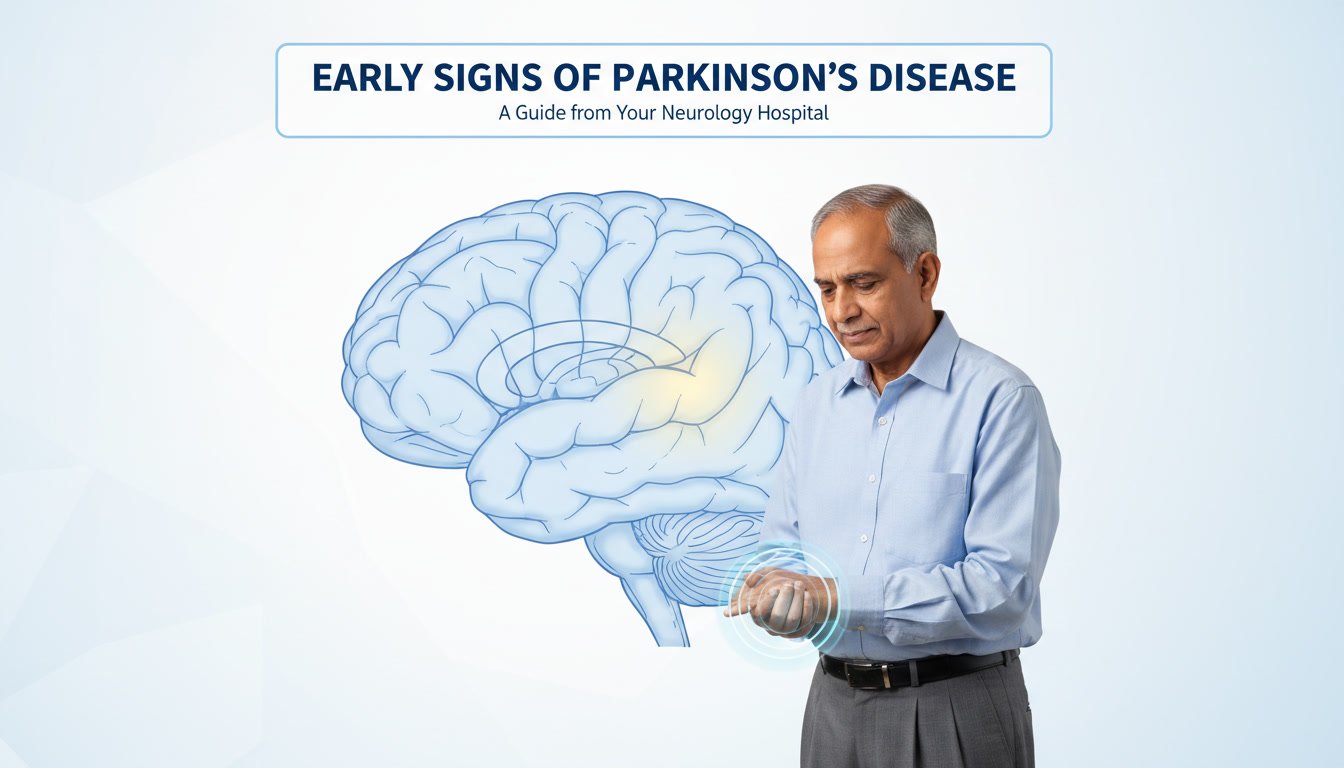
Parkinson’s Disease Early Symptoms: Complete Neurology Guide for India (Signs, Physiotherapy, Diet & Treatment)
Parkinson’s disease is one of the fastest-growing neurological disorders in India. Because early symptoms are often mild and misunderstood, diagnosis is frequently delayed. Many patients initially ignore subtle changes like hand tremor, slowed movement, constipation, or loss of smell.
Understanding Parkinson’s disease early symptoms is crucial for early intervention, better quality of life, and slowing functional decline.
This India-focused guide covers:
- Early signs and warning symptoms
- Detailed comparison with similar conditions
- Physiotherapy role
- Diet and nutrition guidance
- Activity and exercise recommendations
- Related neurological disorders
- India statistics
- Case examples
- When to consult a neurologist
- Long-term management
- Conversion guidance for clinic website
What Is Parkinson’s Disease?
Featured Snippet Definition
Parkinson’s disease is a progressive neurodegenerative disorder caused by loss of dopamine-producing neurons in the substantia nigra of the brain, leading to tremors, stiffness, slow movements, and balance problems.
It primarily affects people above 55 years but can occur earlier (Young-Onset Parkinson’s).
Parkinson’s Disease Early Symptoms (Most Important Section)
Early symptoms are subtle and develop gradually.
1. Resting Tremor
- Usually starts in one hand
- “Pill-rolling” movement
- Present at rest, reduces during movement
2. Bradykinesia (Slowness of Movement)
- Taking longer to perform daily tasks
- Slow walking
- Reduced arm swing
3. Rigidity (Muscle Stiffness)
- Stiff arms or legs
- Neck stiffness
- Shoulder pain (often misdiagnosed as orthopedic problem)
4. Micrographia
- Handwriting becomes smaller
5. Loss of Smell (Hyposmia)
Often occurs years before motor symptoms.
6. Constipation
Common early non-motor symptom.
7. Sleep Disturbance (REM Sleep Behavior Disorder)
- Acting out dreams
- Talking or moving during sleep
8. Depression or Anxiety
May appear before motor signs.
Parkinson’s Disease Early Symptoms vs Normal Aging
| Feature | Normal Aging | Early Parkinson’s |
|---|---|---|
| Tremor | Rare | Common (resting tremor) |
| Slowness | Mild | Progressive |
| Balance | Slight | Increasing instability |
| Handwriting | Slight change | Noticeably small |
| Facial Expression | Normal | Mask-like face |
India Statistics: Parkinson’s Disease Burden
- Estimated prevalence in India: 0.3%–0.6% in people over 60
- Urban prevalence increasing
- Higher risk with aging population
- Underdiagnosed in rural areas
Studies suggest environmental exposure, pesticides, and aging population contribute to rising cases. With increasing life expectancy in India, Parkinson’s disease cases are projected to grow significantly in the next two decades.
Causes & Risk Factors in Indian Context
Major Risk Factors
- Aging (most important)
- Family history
- Environmental toxins
- Pesticide exposure (rural risk factor)
- Head injury
- Male gender slightly higher risk
Pathophysiology (Neurological Mechanism)
Loss of dopamine neurons in:
- Substantia nigra
- Basal ganglia circuits
Results in:
- Motor control dysfunction
- Impaired movement initiation
- Rigidity and tremors
Dopamine deficiency disrupts movement coordination.
Physiotherapy Role in Parkinson’s Disease Early Symptoms
Physiotherapy is essential from early stage.
Goals
- Improve mobility
- Prevent stiffness
- Maintain balance
- Reduce fall risk
- Improve posture
Evidence-Based Physiotherapy Interventions
- Gait training
- Balance exercises
- Strength training
- Postural correction
- Stretching exercises
- Cueing strategies (auditory/visual cues)
Early physiotherapy delays functional decline.
Diet Guidance for Parkinson’s Disease
High-Fiber Diet
- Prevent constipation
- Whole grains
- Fruits and vegetables
Adequate Hydration
2–3 liters per day.
Protein Timing
Levodopa absorption may be affected by high-protein meals. Protein intake may be better in evening under medical advice.
Antioxidant-Rich Foods
- Berries
- Leafy greens
- Nuts
- Turmeric
Activity Recommendations
Recommended Activities
- Daily walking
- Tai chi
- Yoga
- Resistance training
- Cycling
- Speech therapy exercises
Avoid
- Sedentary lifestyle
- Sudden high-risk movements
- Poor posture
Related Neurological Problems
- Essential tremor
- Multiple system atrophy
- Progressive supranuclear palsy
- Drug-induced Parkinsonism
- Dementia with Lewy bodies
Case Examples (India-Focused)
Case 1: Retired Teacher, 62 Years (Patna)
- Right-hand tremor
- Slower walking
- Reduced facial expression
Diagnosis: Early Parkinson’s disease
Treatment: Levodopa + physiotherapy
Outcome: Improved mobility and confidence.
Case 2: Farmer, 58 Years (Rural Bihar)
- Stiffness
- Shoulder pain
- Constipation
Initially treated as orthopedic issue. Later diagnosed with Parkinson’s.
When to Consult a Neurologist
- Persistent resting tremor
- Progressive slowness
- Unexplained stiffness
- Balance issues
- Family history
Treatment Options in India
Medications
- Levodopa
- Dopamine agonists
- MAO-B inhibitors
- COMT inhibitors
Advanced Therapy
- Deep Brain Stimulation (DBS)
- Infusion therapies
E-E-A-T Medical Authority Section
This content is based on internationally accepted neurology guidelines and movement disorder diagnostic criteria. Accurate diagnosis requires detailed neurological examination. Early consultation prevents disability.
Long-Term Management Strategy
- Early diagnosis
- Medication adherence
- Physiotherapy
- Balanced diet
- Mental health support
- Fall prevention strategies
- Regular follow-up
FAQs: Parkinson’s Disease Early Symptoms
1. What is the first sign of Parkinson’s disease?
Often a resting tremor in one hand.
2. Can Parkinson’s be cured?
No cure yet, but treatment controls symptoms effectively.
3. Is Parkinson’s hereditary?
Mostly sporadic, but family history increases risk.
4. Can exercise slow Parkinson’s?
Yes, regular exercise improves mobility and delays decline.
Book Consultation – Early Parkinson’s Evaluation
If you or your loved one notices:
- Hand tremor
- Slowness of movement
- Stiffness
- Balance problems
Early evaluation is essential.
📞 Book Neurology Consultation
🧠 Parkinson’s Screening & Diagnosis
💪 Physiotherapy & Rehabilitation
📍 Evidence-Based Movement Disorder Care