Fatty Liver Disease: Symptoms, Stages & How Patients Can Reverse It Naturally
Introduction: Why Seeing “Fatty Liver” in a Report Is Scary for Patients
Many patients feel anxious when an ultrasound or blood report mentions “Fatty Liver”.
Common questions are:
- Is this a serious disease?
- Will it damage my liver permanently?
- Will I need lifelong medicines or surgery?
The truth is: Fatty Liver Disease is common, mostly reversible in early stages,
and highly dependent on lifestyle changes.
This blog explains everything in simple, patient-friendly language so you can understand
your condition and take control early.
What Is Fatty Liver Disease?
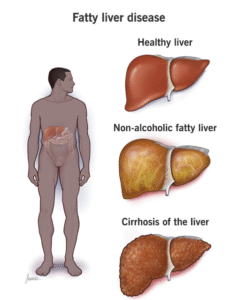
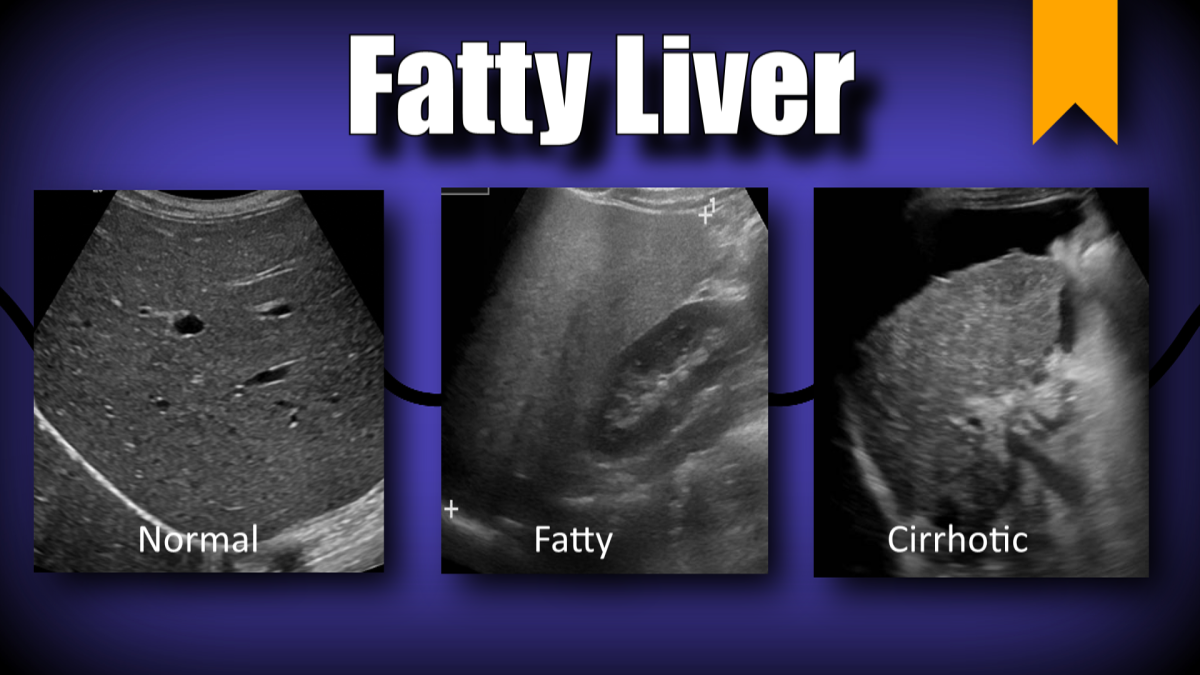
Fatty Liver Disease occurs when excess fat accumulates inside liver cells.
Normally, the liver contains a small amount of fat, but when fat exceeds
5–10% of liver weight, it becomes abnormal.
Types of Fatty Liver
-
- NAFLD (Non-Alcoholic Fatty Liver Disease) – Fatty liver not caused by alcohol
- MAFLD (Metabolic Associated Fatty Liver Disease) – Linked to obesity, diabetes, cholesterol, and metabolic syndrome
NAFLD vs MAFLD: Patient-Friendly Explanation
What is NAFLD?
NAFLD (Non-Alcoholic Fatty Liver Disease) is a condition in which excess fat accumulates in the liver
in people who drink little or no alcohol.
In NAFLD:
- Fat builds up in liver cells
- Alcohol is not the cause
- Diagnosis is made by excluding alcohol intake and other liver diseases
Traditionally, NAFLD has been divided into:
- Simple Fatty Liver (Steatosis) – Fat accumulation without significant inflammation
- NASH (Non-Alcoholic Steatohepatitis) – Fat + inflammation + liver cell injury
If untreated, NAFLD can progress to fibrosis, cirrhosis, or in rare cases, liver cancer.
NAFLD became very common due to:
- Obesity
- Diabetes
- High cholesterol
- Sedentary lifestyle
Limitation of NAFLD:
The term focuses on what the disease is not (non-alcoholic),
rather than explaining why the disease occurs.
What is MAFLD?
MAFLD (Metabolic Associated Fatty Liver Disease) is a newer and more accurate term introduced by
international liver experts.
MAFLD recognizes that fatty liver is primarily a metabolic disease,
not just a diagnosis made after excluding alcohol.
In MAFLD:
- Diagnosis is based on metabolic risk factors
- Alcohol intake does not automatically exclude the diagnosis
- Focus is on metabolic dysfunction, not drinking history
To diagnose MAFLD, a patient must have fatty liver plus at least one of the following:
- Overweight or obesity
- Type 2 diabetes
- Metabolic abnormalities (high BP, high triglycerides, insulin resistance)
👉 This means a person may have both alcohol intake and metabolic fatty liver,
which the NAFLD concept previously ignored.
Why Did Doctors Shift from NAFLD to MAFLD?
- Most fatty liver patients have metabolic problems
- NAFLD ignored insulin resistance, obesity, and diabetes as core causes
- MAFLD better predicts disease severity and cardiovascular risk
- MAFLD gives better long-term outcome prediction
MAFLD is more patient-centric, realistic, and clinically useful.
Key Differences Between NAFLD and MAFLD
| Feature | NAFLD | MAFLD |
|---|---|---|
| Full Form | Non-Alcoholic Fatty Liver Disease | Metabolic Associated Fatty Liver Disease |
| Diagnostic Basis | Excludes alcohol | Includes metabolic risk factors |
| Main Focus | What the disease is NOT | Why the disease occurs |
| Alcohol Intake | Must be absent or minimal | Can be present |
| Role of Metabolism | Indirect | Central and mandatory |
| Accuracy | Limited | More accurate |
| Current Usage | Older term | Preferred modern term |
Which Term Is Better for Patients?
MAFLD is considered better because it:
- Explains the real cause (metabolic dysfunction)
- Reduces confusion about alcohol intake
- Helps doctors focus on weight, sugar, BP, and lifestyle
- Encourages early lifestyle-based treatment
However, NAFLD is still widely used in reports and older guidelines,
so patients may see both terms.
Bottom Line for Patients
- NAFLD and MAFLD describe fat accumulation in the liver
- MAFLD is the newer and more accurate concept
- Early stages are reversible
- Lifestyle correction is the main treatment
- Weight loss, exercise, and metabolic control are key
👉 Today, doctors prefer the term MAFLD because it better reflects the metabolic causes.
Why Is Fatty Liver Increasing So Fast?
- High intake of junk food, fried food, sugary drinks
- Sedentary lifestyle (less physical activity)
- Obesity and belly fat
- Diabetes and insulin resistance
- High cholesterol and triglycerides
- Irregular sleep and chronic stress
In India, even lean individuals can develop fatty liver due to poor diet and inactivity.
Is Fatty Liver Dangerous?
Short Answer: Not always, but it can become dangerous if ignored.
Fatty Liver Progression (If Not Controlled)
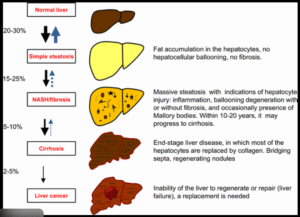
- Simple Fatty Liver (Grade 1) – Reversible
- Fatty Liver with Inflammation (NASH)
- Fibrosis – Scar tissue formation
- Cirrhosis – Permanent liver damage
- Liver Failure / Liver Cancer (rare)
👉 Good news: Most patients are diagnosed in Grade 1 or Grade 2,
where complete reversal is possible.
Stages of Fatty Liver Disease (Explained Simply)
🟢 Grade 1 – Mild Fatty Liver
- Mild fat accumulation
- Often no symptoms
- Detected on ultrasound
- 100% reversible
🟡 Grade 2 – Moderate Fatty Liver
- Fat with inflammation
- Symptoms may appear
- Requires strict lifestyle correction
- Reversible with effort
🔴 Grade 3 – Severe Fatty Liver
- Significant fat and inflammation
- Risk of fibrosis
- Needs medical supervision
- Reversal possible but slow
Common Symptoms Patients Experience
- Constant tiredness and low energy
- Heaviness or discomfort in right upper abdomen
- Bloating and indigestion
- Mild abdominal pain
- Weight gain (especially belly fat)
- Loss of appetite
- Brain fog or poor concentration
👉 If fatty liver progresses, symptoms can worsen.
How Is Fatty Liver Diagnosed?
- Ultrasound abdomen (most common)
- Liver function tests (SGOT, SGPT)
- FibroScan (for fibrosis)
- Lipid profile and blood sugar tests
⚠️ Important: Normal liver enzymes do NOT rule out fatty liver.
Can Fatty Liver Be Reversed Naturally?
✅ Yes – In Most Patients
The 4 Pillars of Reversal
- Weight management
- Diet correction
- Physical activity
- Control of sugar & cholesterol
Best Diet for Fatty Liver Patients
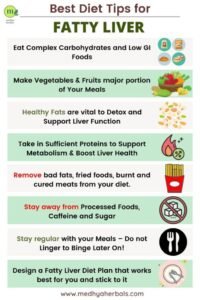
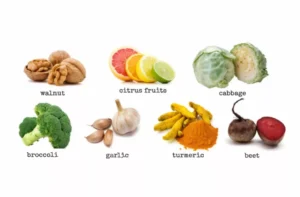
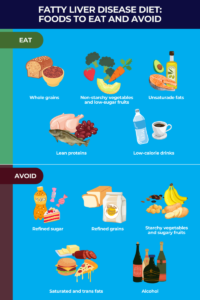
Foods to Eat
- Green vegetables (spinach, broccoli, lauki)
- Fruits (apple, papaya, berries – in moderation)
- Whole grains (oats, brown rice)
- Lean protein (dal, paneer, fish, eggs)
- Nuts and seeds (limited quantity)
- Adequate water intake
Foods to Avoid
- Fried food
- Bakery items
- Sugary drinks and sweets
- Alcohol (strictly avoid)
- White rice and refined flour
- Processed foods
Role of Exercise in Fatty Liver Reversal
- Brisk walking (30–45 minutes daily)
- Cycling or swimming
- Light strength training
- Yoga and breathing exercises
👉 Even 5–7% weight loss can significantly reduce liver fat.
Do Patients Need Medicines?
- No specific medicine cures fatty liver
- Medicines may be given to control sugar or cholesterol
- Supplements only under medical advice
⚠️ Avoid self-medication or herbal products without guidance.
Fatty Liver & Alcohol: A Warning
Even small amounts of alcohol worsen fatty liver.
Complete alcohol avoidance is the safest option.
Common Patient Myths
- “Fatty liver always leads to liver failure” ❌
- “Only alcoholics get fatty liver” ❌
- “Medicines alone can cure it” ❌
Reality: Lifestyle change is the strongest treatment.
When Should Patients Worry?
- Persistent abdominal pain
- Yellowing of eyes or skin
- Severe fatigue
- Swelling in legs or abdomen
Final Doctor’s Advice for Patients
Fatty liver is not a death sentence.
It is a warning sign from your body.
If you act early, follow diet and exercise,
your liver can heal completely.
फैटी लिवर बीमारी: लक्षण, स्टेज और मरीज इसे कैसे ठीक कर सकते हैं
(Patient-Focused Guide – Hindi)
फैटी लिवर क्या है?
जब लिवर में जरूरत से ज्यादा चर्बी जमा हो जाती है,
तो उसे फैटी लिवर बीमारी कहते हैं।
- मोटापा
- डायबिटीज या कोलेस्ट्रॉल
- शारीरिक मेहनत की कमी
रिपोर्ट में “Fatty Liver” लिखा आए तो घबराएं नहीं
- यह अक्सर शुरुआती स्टेज में पकड़ी जाती है
- पूरी तरह ठीक हो सकती है
- सही खानपान और जीवनशैली से कंट्रोल होती है
फैटी लिवर के स्टेज
- ग्रेड 1 – हल्की चर्बी (पूरी तरह ठीक)
- ग्रेड 2 – सूजन के साथ चर्बी
- ग्रेड 3 – गंभीर स्थिति
डॉक्टर की सलाह
फैटी लिवर एक चेतावनी है, सजा नहीं।
आज से ध्यान देंगे तो लिवर फिर से स्वस्थ हो सकता है।
Good News: Early-stage fatty liver can be completely reversed with lifestyle changes.
Warning: Alcohol can worsen fatty liver even in small amounts.