Heart Attack in Young Age: Early Symptoms & Prevention
Heart Attack in Young Age: Early Symptoms Every Patient Must Know
“Chest Pain Hai… Gas Hoga ? ” – The Most Dangerous Mistake
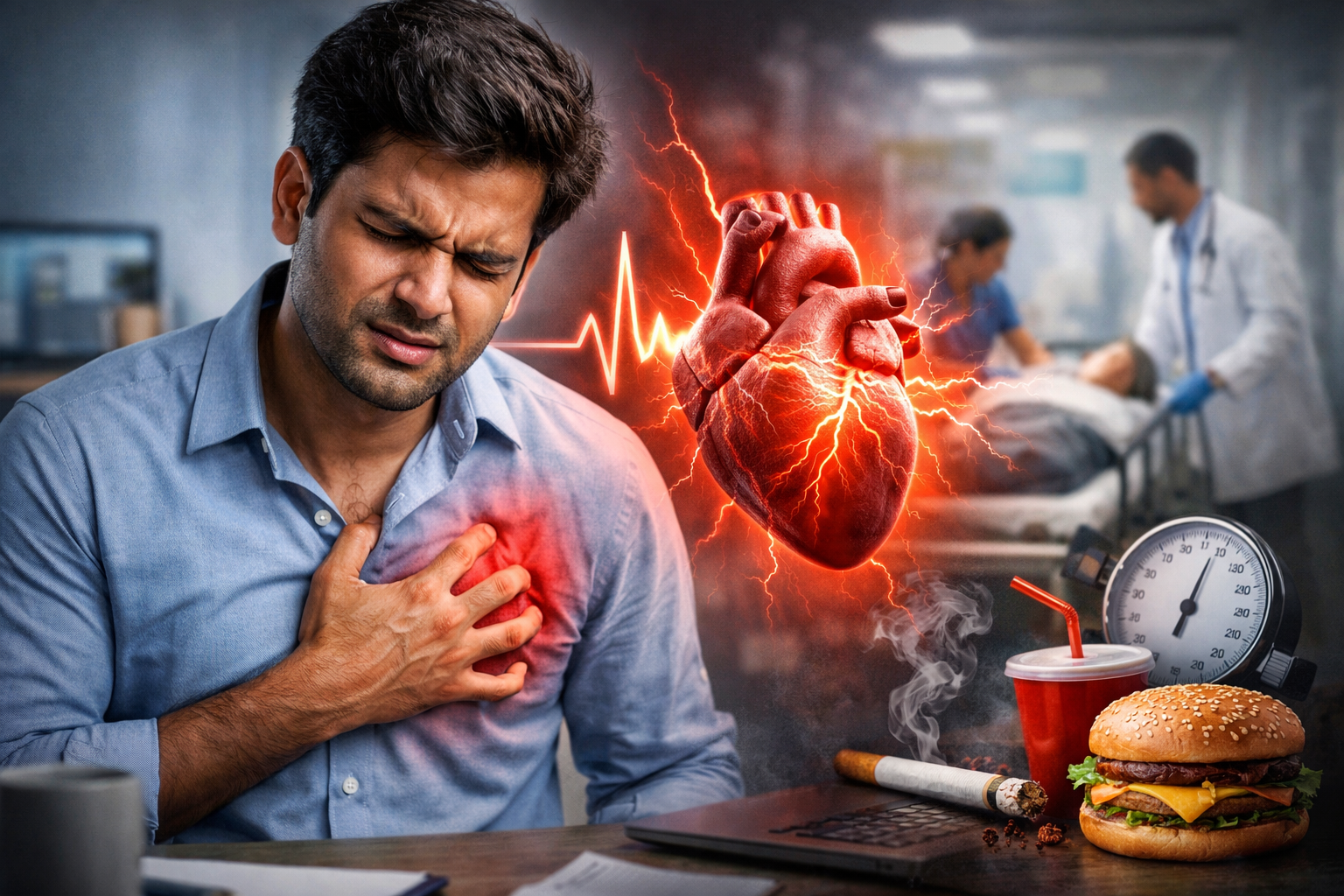
In OPD and emergency rooms today, doctors are seeing a rapid rise in heart attacks
among young adults (25–45 years).
The most dangerous problem is delay—because many patients mistake
heart attack symptoms for gas, acidity, or muscle pain.
- “Doctor, chest me jalan thi… gas samajh ke ignore kar diya.”
- “Main young hoon, mujhe heart problem kaise ho sakta hai?”
- “Pain aaya aur chala gaya, socha acidity hogi.”
⚠️ This confusion costs lives.
This blog explains early symptoms, risk factors, and prevention of heart attack
in young age—in simple, patient-friendly language.
What Is a Heart Attack ?
A heart attack (medically called Myocardial Infarction) happens when:
- Blood flow to the heart muscle suddenly gets blocked
- Usually due to fatty plaque and blood clot in coronary arteries
- Heart muscle starts getting damaged due to lack of oxygen
👉 Every minute matters. Early treatment saves heart muscle and life.
Why Are Heart Attacks Increasing in Young Adults ?
Earlier, heart attacks were seen mostly after 55–60 years.
Today, lifestyle diseases are the main reason young people are affected.
Major Reasons
- Smoking & tobacco use
- High blood pressure (BP)
- Diabetes (often undiagnosed)
- High cholesterol
- Stress & lack of sleep
- Sedentary lifestyle
- Junk food & sugary drinks
- Family history of heart disease
👉 Many young patients look “healthy” but have hidden risk factors.
Chest Pain: Heart Attack vs Gas (MOST IMPORTANT)
Heart Attack Chest Pain
- Pressure, heaviness, or tightness
- Pain lasting more than 10–15 minutes
- May spread to left arm, jaw, neck, or back
- Associated with sweating, nausea, breathlessness, anxiety
Gas / Acidity Pain
- Burning sensation
- Relieved by burping or antacids
- Usually related to meals
- Does NOT radiate to arm or jaw
⚠️ If in doubt, treat chest pain as heart attack until proven otherwise.
Early Warning Symptoms in Young Patients
Common Symptoms
- Chest discomfort (even mild)
- Shortness of breath
- Cold sweating
- Sudden fatigue
- Dizziness
- Nausea or vomiting
Less Known Symptoms (Often Ignored)
- Jaw pain
- Left shoulder pain
- Upper back pain
- Unusual anxiety or restlessness
👉 Young patients often have atypical symptoms, so awareness is critical.
Real-Life Patient Examples
Example 1: 32-Year-Old Smoker
A 32-year-old man, smoker for 10 years, developed chest tightness at night.
He took antacid thinking it was gas.
Pain increased, and he collapsed after 2 hours.
Diagnosis: Acute heart attack
Cause: Smoking + high cholesterol (unknown earlier)
👉 Early ECG could have saved critical heart muscle.
Example 2: 38-Year-Old IT Professional
A 38-year-old software engineer with stress, long sitting hours, and poor sleep
developed jaw pain and sweating. No chest pain initially.
ECG showed heart attack.
Risk factors: Undiagnosed diabetes + hypertension.
Role of BP (Blood Pressure)
- High BP damages blood vessels silently
- Normal BP: <120/80 mmHg
- Many young adults have borderline or high BP without symptoms
- High BP accelerates plaque formation
👉 BP should be checked at least once every 6 months.
Role of Diabetes (Sugar)
- High sugar damages arteries
- Diabetics may have painless (silent) heart attacks
- Many young adults are prediabetic without knowing it
👉 HbA1c test is crucial, even in young age.
Smoking & Tobacco: The Strongest Risk Factor
- Narrows arteries
- Increases clot formation
- Reduces oxygen supply
👉 Even 1–2 cigarettes daily increase heart attack risk significantly.
Stress & Lifestyle Factors
- Chronic stress raises BP and sugar
- Poor sleep increases inflammation
- Physical inactivity weakens heart health
Modern lifestyle keeps the heart in a constant fight-or-flight state.
Can Young People Have “Silent” Heart Attacks?
Yes. Silent heart attacks:
- Have mild or no typical chest pain
- Are more common in diabetics and smokers
- Are often detected later on ECG or echo
When Should Patients Rush to Hospital?
🚨 Do NOT wait if you have:
- Chest pain lasting more than 10 minutes
- Chest pain with sweating or breathlessness
- Pain radiating to arm, jaw, or back
- Sudden collapse or fainting
👉 Call emergency services immediately.
Diagnosis of Heart Attack
- ECG (within minutes)
- Blood tests (Troponin)
- Echocardiography
- Coronary angiography (if needed)
Early diagnosis = life-saving treatment.
Can Heart Attacks Be Prevented?
✅ YES – In most young adults
Prevention Checklist
- Stop smoking completely
- Control BP and sugar
- Regular physical activity (30–45 minutes daily)
- Healthy diet (low salt, low sugar, low fat)
- Stress management
- Regular health check-ups
Common Myths Among Young Patients
- “I am too young for heart attack” ❌
- “Chest pain was mild, so it’s gas” ❌
- “I exercise sometimes, so I’m safe” ❌
Reality: Heart disease has no age limit.
Doctor’s Advice for Patients (Dr. Abhijeet)
Heart attack in young age is real and rising.
Do not ignore chest discomfort, jaw pain, or breathlessness.
Early action saves heart muscle—and life.
कम उम्र में हार्ट अटैक: शुरुआती लक्षण जो हर मरीज को जानने चाहिए
“सीने में दर्द है… गैस होगी?” – सबसे बड़ी गलती
आजकल 25–45 साल की उम्र में हार्ट अटैक तेजी से बढ़ रहे हैं।
सबसे बड़ी समस्या है लक्षणों को नजरअंदाज करना।
हार्ट अटैक क्या होता है?
जब दिल की नस में अचानक ब्लॉकेज हो जाता है,
तो दिल की मांसपेशियों को ऑक्सीजन नहीं मिलती—इसे हार्ट अटैक कहते हैं।
हार्ट अटैक के शुरुआती लक्षण
आम लक्षण
- सीने में दबाव या भारीपन
- पसीना आना
- सांस फूलना
- उलटी या जी मिचलाना
कम पहचाने जाने वाले लक्षण
- जबड़े में दर्द
- बाएं हाथ में दर्द
- पीठ में दर्द
- अचानक बेचैनी
गैस और हार्ट अटैक में फर्क
- गैस का दर्द: जलन, डकार से आराम
- हार्ट अटैक: दबाव, पसीना, सांस फूलना
👉 शक हो तो अस्पताल जाएं—घर पर इंतजार न करें।
BP, शुगर और स्मोकिंग की भूमिका
- हाई BP नसों को नुकसान पहुंचाता है
- डायबिटीज हार्ट अटैक को “साइलेंट” बना सकती है
- स्मोकिंग सबसे बड़ा जोखिम कारक है
मरीजों के लिए डॉक्टर की सलाह (डॉ अभिजीत कुमार)
कम उम्र में हार्ट अटैक कोई अफवाह नहीं, हकीकत है।
सीने के दर्द को कभी गैस समझकर नजरअंदाज न करें।
समय पर इलाज से जान बचाई जा सकती है।