Brain Stroke Recovery Timeline | Stages, Progress & Physiotherapy
🧠 Brain Stroke Recovery Timeline
A Complete Patient-Friendly Guide (Stages, Progress, Benefits, Risks & Hope)
“Doctor, will he recover? How long will it take? Will he walk or speak again?”
These are the most common and emotional questions asked by families after a loved one suffers a brain stroke.
Stroke does not end when emergency treatment is over.
👉 The real journey begins after survival — the recovery journey.
Most people have no clear idea:
- How long stroke recovery takes
- What improves first and what improves later
- Why some patients recover faster than others
- Whether improvement stops after a few months
- How physiotherapy really helps
This guide explains the brain stroke recovery timeline in simple, non-medical English so that even a common person can understand:
- What happens inside the brain after stroke
- What to expect at each stage of recovery
- Benefits and limitations of recovery
- Mistakes that slow recovery
- Why hope is realistic, not false
🚨 What Is a Brain Stroke? (Quick Recap)
A brain stroke happens when:
- Blood supply to part of the brain is blocked, or
- A blood vessel in the brain bursts and bleeds
Because of this:
- Brain cells stop getting oxygen
- Brain cells start dying within minutes
- Body parts controlled by that brain area stop working properly
⚠️ Stroke is always a medical emergency, but recovery is a long-term process, not a one-day event.
🧠 Why Stroke Recovery Takes Time
- The brain does not heal quickly like skin
- It needs time to reorganize itself
- It relearns skills through repetition
The brain has a special ability called neuroplasticity, which means:
- Healthy brain areas can learn lost functions
- New pathways form with training and therapy
👉 Stroke recovery is not magic — it is brain re-learning.
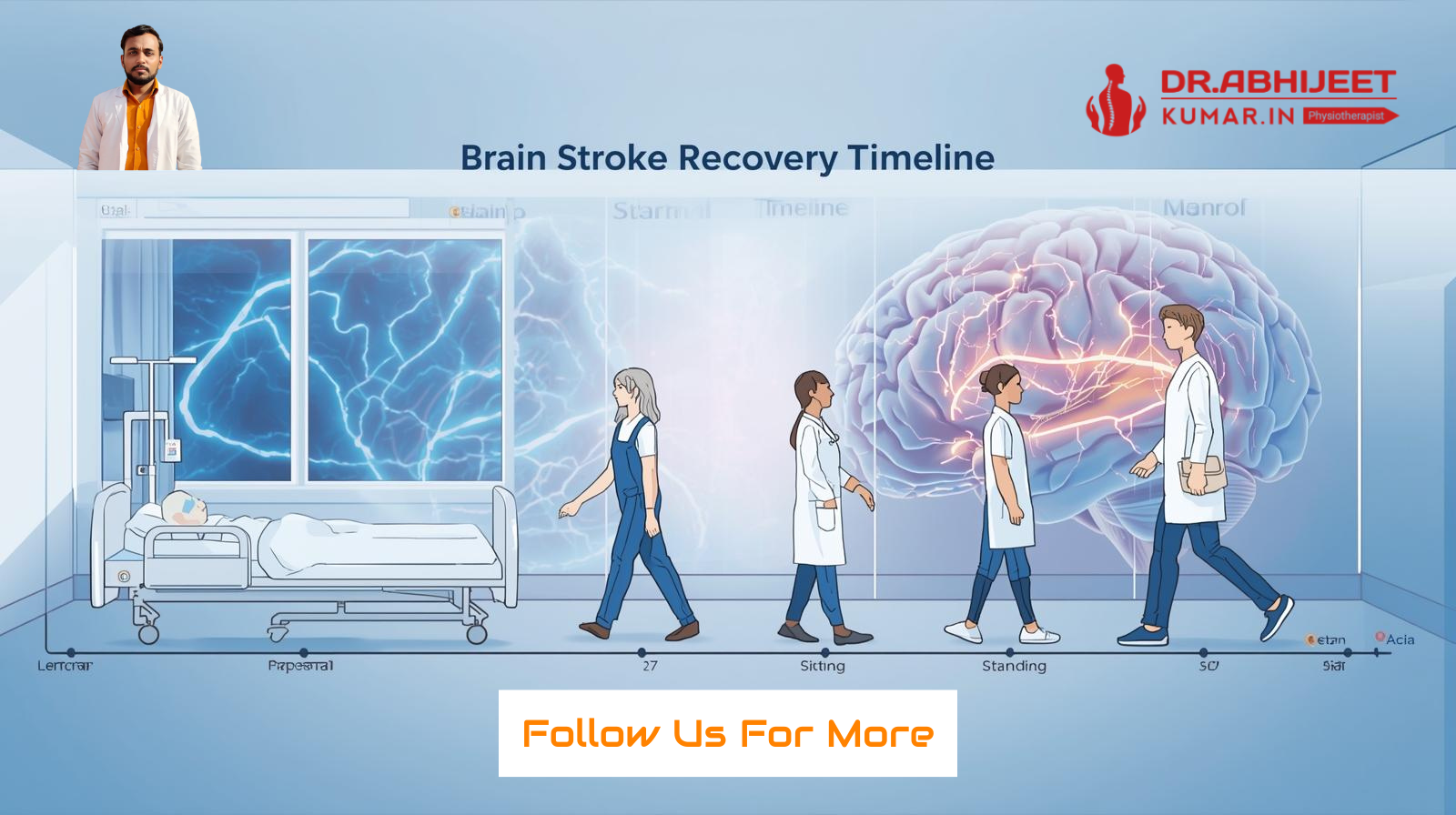
⏳ Brain Stroke Recovery Timeline – Stage by Stage
Every patient is different, but most stroke survivors follow a similar recovery pattern.
🕐 Stage 1: Acute Phase (First 24–72 Hours)
What Happens?
- Patient is in emergency or ICU
- Doctors focus on saving life and preventing further damage
- BP, sugar, oxygen are stabilized
Patient Condition
- Reduced consciousness
- Sudden paralysis on one side
- Absent or slurred speech
- Confusion or sleepiness
Recovery Expectation
❌ Do not expect visible recovery yet.
✔️ Goal = survival and stabilization.
Benefits & Risks
- Benefit: Limits brain damage
- Risk: Brain swelling, repeat stroke, complications
👉 Family role: Stay calm, avoid panic decisions, trust emergency care.
🕑 Stage 2: Early Recovery Phase (1–2 Weeks)
Brain Changes
- Brain swelling reduces
- Blood circulation improves
- Some shocked brain cells wake up
Early Improvements
- Slight finger or toe movement
- Better alertness
- Small facial movements
- Early speech sounds
Physiotherapy Role
- Bed positioning
- Passive movements
- Sitting balance training
👉 Early therapy = better long-term outcome.
🕒 Stage 3: Sub-Acute Phase (2 Weeks – 3 Months)
This is the most important recovery window.
Brain Activity
- Neuroplasticity is at its peak
- Brain responds fastest to training
Common Improvements
- Better sitting balance
- Standing with support
- Beginning walking
- Clearer speech
- Better hand movement
Physiotherapy Focus
- Strength training
- Balance exercises
- Walking (gait) training
- Hand function and coordination
👉 This phase decides future independence.
🕓 Stage 4: Continued Recovery Phase (3–6 Months)
- Recovery slows but continues
- Skills become refined
Progress Seen
- Walking with minimal support
- Better hand control
- Improved speech fluency
- Better memory and attention
Therapy Goals
- Endurance building
- Functional activities (stairs, transfers)
- Confidence building
👉 Feeling “stuck” is common but improvement continues.
🕔 Stage 5: Long-Term Recovery (6 Months – 1 Year & Beyond)
❌ Recovery does NOT stop at 6 months.
✔️ It becomes slower but continues.
- Better muscle control
- Improved endurance
- Balance confidence
- Speech clarity
- Emotional stability
Ongoing physiotherapy prevents decline, maintains gains, and improves quality of life.
🧩 Factors Affecting Recovery Speed
Positive Factors
- Early hospital care
- Early physiotherapy
- Younger age
- Family support
- Good motivation
Negative Factors
- Severe brain damage
- Delayed rehabilitation
- Poor BP or sugar control
- Depression
- Irregular exercises
❌ Common Myths
- Recovery stops after 3 months ❌
- No early movement means no recovery ❌
- Medicines alone are enough ❌
- Physiotherapy is optional ❌
✔️ Reality: Recovery is slow, uneven, but possible.
📌 Final Takeaway
Stroke recovery follows a timeline — but hope does not follow a deadline.
The right care today can change someone’s life for years to come.