Epilepsy Symptoms and Management | Seizures, Treatment & Care
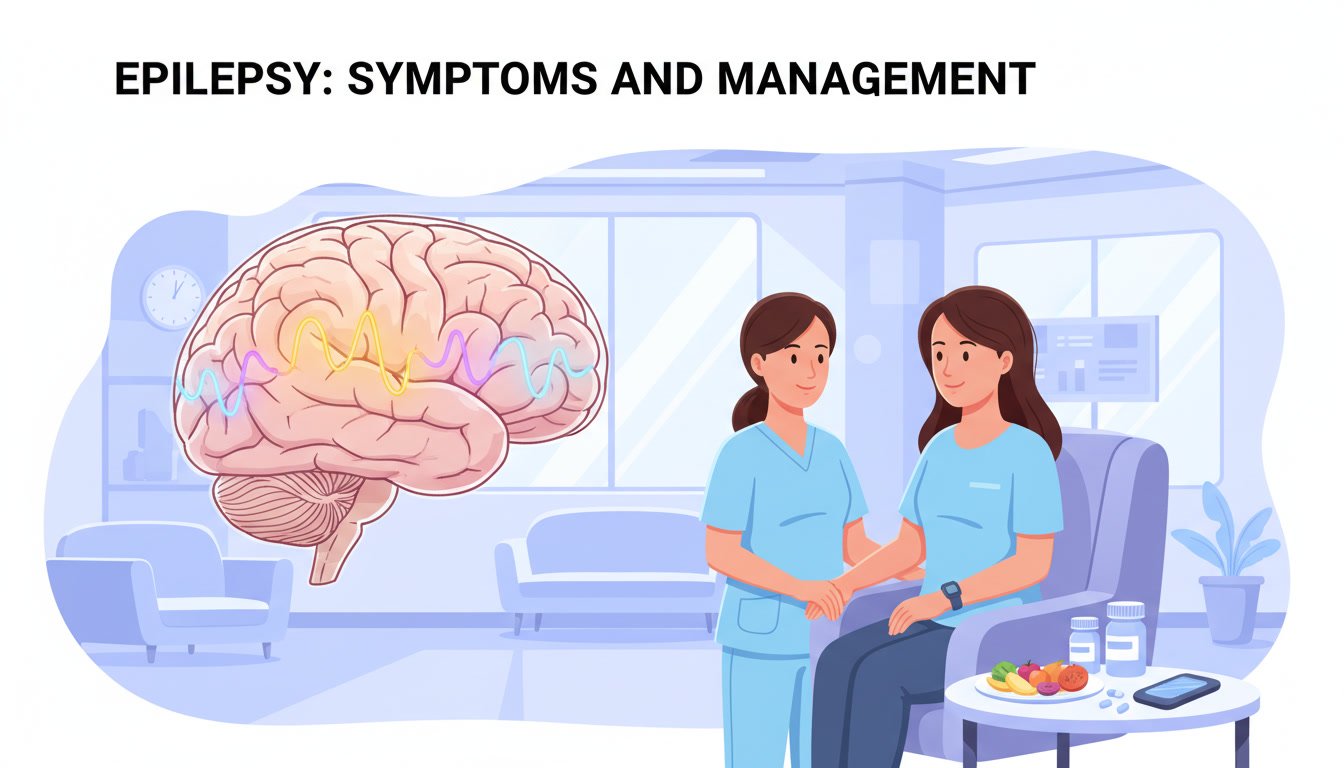
🧠 Epilepsy: Symptoms and Management
Understanding epilepsy symptoms and management helps patients and families reduce fear and manage seizures safely.
A Complete Patient-Friendly Guide (Seizures, Treatment, Benefits, Risks & Hope)
“Doctor, suddenly he fell down and started shaking… foam came from his mouth… is this epilepsy? Will it happen again?”
These are very common and frightening questions asked by patients and families in OPD and emergency rooms.
The word “epilepsy” creates fear, confusion, and stigma.
Many people believe:
- Epilepsy means mental illness
- Epilepsy patients cannot live a normal life
- Epilepsy is always lifelong and uncontrollable
- Nothing can be done except strong medicines
❌ Most of these beliefs are wrong.
This guide is written in very simple, non-medical English so that even a common person can understand:
- What epilepsy really is
- What epilepsy symptoms look like
- Different types of seizures
- Why epilepsy happens
- How epilepsy is treated and managed
- Benefits and risks of treatment
- How people with epilepsy can live a safe, productive, and dignified life
🚨 What Is Epilepsy? (Very Simple Explanation)
Epilepsy is a brain disorder in which a person has repeated seizures.
A seizure happens when:
- There is sudden abnormal electrical activity in the brain
- Brain cells fire in an uncontrolled way
- Normal brain function is temporarily disturbed
Because the brain controls:
- Movement
- Speech
- Awareness
- Emotions
A seizure can affect any of these functions.
👉 Important:
One single seizure does not always mean epilepsy.
Epilepsy is diagnosed when seizures recur without a temporary cause.
🧠 How the Brain Normally Works
- Brain cells communicate using controlled electrical signals
- Signals are organized and balanced
In epilepsy:
- Electrical signals become sudden and excessive
- Brain activity becomes disorganized
- This causes a temporary brain overload
⚠️ The type of seizure depends on which part of the brain is involved.
🔬 Types of Seizures
Not all seizures look the same. Some are dramatic, others are subtle.
🟥 1. Generalized Seizures (Whole Brain Involved)
🔹 Tonic–Clonic Seizure (Fits)
- Sudden loss of consciousness
- Body stiffness followed by jerking movements
- Clenched teeth
- Foaming from mouth
- Loss of bladder control
- Extreme tiredness after seizure
⏱️ Usually lasts 1–3 minutes.
🔹 Absence Seizure (Staring Spells)
- Sudden blank stare
- No response for a few seconds
- Lip smacking or blinking
- Quick return to normal
⚠️ Often mistaken as daydreaming.
🟥 2. Focal (Partial) Seizures
🔹 Focal Aware Seizure
- Person remains awake
- Tingling sensations
- Sudden fear or déjà vu
- Unusual smells or tastes
🔹 Focal Impaired Awareness Seizure
- Person appears awake but confused
- Repetitive actions like lip smacking
- Hand rubbing or aimless walking
- No memory of the event later
⚠️ Common Symptoms Outside Seizures
- Sudden confusion
- Temporary memory loss
- Sudden fear or panic
- Uncontrolled movements
- Episodes of staring
- Sudden falls
⚠️ Many seizures occur without warning.
🧩 What Causes Epilepsy?
- Head injury or trauma
- Stroke or brain bleeding
- Brain infections (meningitis, encephalitis)
- Birth-related brain damage
- Genetic factors
- Brain tumors or structural problems
👉 Important:
In nearly 50% of patients, no clear cause is found — this does not mean treatment is impossible.
🚨 When Is Epilepsy an Emergency?
- Seizure lasts more than 5 minutes
- Repeated seizures without recovery
- Seizure after head injury
- Breathing difficulty after seizure
- First seizure in life
- Seizure during pregnancy
🏥 Epilepsy Management
💊 Anti-Epileptic Medicines
- Stabilize brain electrical activity
- Prevent abnormal neuron firing
- About 70% patients achieve good seizure control
⚠️ Never stop medicines suddenly without doctor advice.
🧠 Surgery (Selected Cases)
- For medicine-resistant epilepsy
- When seizures arise from one brain area
⚡ Vagus Nerve Stimulation (VNS)
A device stimulates a nerve in the neck to reduce seizure frequency.
🥗 Diet Therapy
Ketogenic diet may help some children with difficult epilepsy.
🌱 Lifestyle Management
✅ Do’s
- Take medicines regularly
- Sleep adequately
- Manage stress
- Eat a balanced diet
❌ Don’ts
- Skip medicines
- Drink excessive alcohol
- Stay awake all night
- Drive without medical clearance
🚑 First Aid During a Seizure
✔️ What To Do
- Stay calm
- Lay person on their side
- Remove sharp objects
- Loosen tight clothing
- Time the seizure
❌ What Not To Do
- Do not put anything in the mouth
- Do not restrain movements
- Do not give food or water
🧠 Psychological and Social Aspects
Epilepsy affects confidence, education, employment, and mental health.
Depression and anxiety are common but treatable.
📌 Final Takeaway
Epilepsy is a long-term condition, but it is controllable.
With correct treatment, lifestyle management, and support,
people with epilepsy can live full and meaningful lives.
Written by Dr. Abhijeet Kumar (Physiotherapist)